
Dangerous Goods Shipping from the UAE: The Complete Guide
A single mistake in your dangerous goods declaration can halt a million-dollar shipment at Dubai International Airport. For businesses shipping from the UAE, a global logistics hub with a market valued at USD 54.5 billion in 2024 by IMARC Group, compliance is not optional. It is the price of entry. Misclassifying a flammable liquid or using the wrong packaging doesn't just cause delays; it risks fines, carrier blacklisting, and catastrophic safety failures.
Getting dangerous goods shipping UAE right requires more than just a label and a prayer. It demands a precise understanding of international regulations, carrier-specific restrictions, and local UAE requirements. This guide provides the practical, step-by-step knowledge that logistics managers and business owners need to ship hazardous cargo from the UAE compliantly and without delay.
What Counts as Dangerous Goods (The 9 IATA/UN Classes)
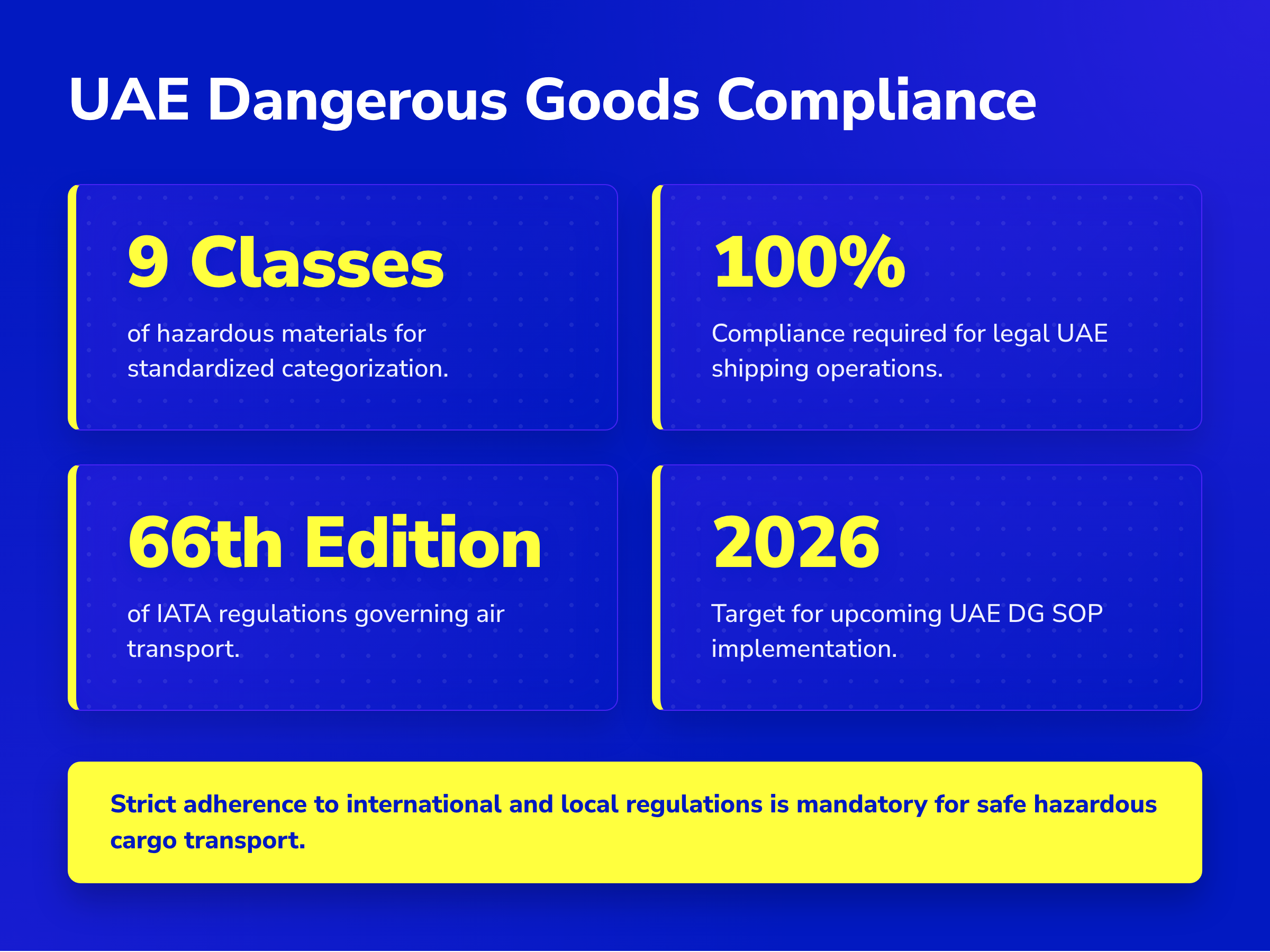
Dangerous goods, or hazardous materials (hazmat), are substances that pose a risk to health, safety, property, or the environment when transported. The UAE, through its General Civil Aviation Authority (GCAA) and port authorities like PCFC, adheres to the globally recognised United Nations (UN) system, which categorises all dangerous goods into nine distinct classes. These classes are the foundation of all DG shipping UAE regulations.
Class 1: Explosives
This class covers substances and articles with an explosion hazard, such as ammunition, fireworks, and detonators. Due to the extreme risk, most Class 1 goods are forbidden on passenger aircraft and heavily restricted on cargo-only flights. They are most relevant in the UAE for specialised industrial sectors like oil and gas (e.g., seismic charges) and require special permits and police escorts for road transport.
Class 2: Gases
Gases are divided into three sub-divisions: flammable (e.g., butane), non-flammable/non-toxic (e.g., carbon dioxide), and toxic (e.g., chlorine). Common examples in the UAE include industrial gas cylinders for manufacturing, refrigerants for the vast cold chain sector, and consumer aerosols. Air transport is highly restrictive, especially for toxic gases and large aerosol quantities.
Class 3: Flammable Liquids
This is one of the most common classes for dangerous goods shipping Dubai. It includes liquids with a flashpoint of 60°C or less, such as paints, solvents, alcohol-based perfumes, and sanitisers. Given Dubai's role as a major re-export hub for cosmetics and consumer goods, compliant handling of Class 3 products is critical for many businesses.
Class 4: Flammable Solids & Related Substances
This class is split into three categories: flammable solids (e.g., metal powders), substances liable to spontaneous combustion, and substances that become dangerous when wet (e.g., calcium carbide). These are typically found in industrial and manufacturing supply chains.
Class 5: Oxidising Substances & Organic Peroxides
These materials can cause or contribute to the combustion of other materials by yielding oxygen. Examples include chemical fertilisers (ammonium nitrate) and hydrogen peroxide. Organic peroxides (Class 5.2) are often temperature-sensitive and face severe restrictions, with many being forbidden on express carrier networks.
Class 6: Toxic and Infectious Substances
Class 6.1 covers toxic substances that can cause death or serious injury if swallowed, inhaled, or by skin contact. Class 6.2 covers infectious substances containing pathogens. This class is highly relevant for the UAE's growing life sciences and healthcare sector, but shipments require expert handling and documentation.
Class 7: Radioactive Material
This class includes any material containing radionuclides. Transport is governed by stringent international and national regulations, requiring specialised packaging, handling, and carrier approval. It is primarily used in the medical, industrial, and energy sectors.
Class 8: Corrosive Substances
Corrosives are substances that cause severe damage when in contact with living tissue or, in the case of leakage, will materially damage or destroy other goods or the means of transport. Common examples include strong acids, alkalis, and wet-cell batteries.
Class 9: Miscellaneous Dangerous Goods
This is a catch-all class for substances and articles that present a danger during transport but do not fit into the other eight classes. The most common Class 9 item shipped from the UAE is lithium batteries, found in everything from laptops and smartphones to electric vehicles. This class also includes dry ice (used as a coolant) and environmentally hazardous substances.
Key Differences: Air vs. Road Restrictions in the UAE
While the nine classes are universal, the rules for their transport differ significantly by mode. According to GCAA regulations, air transport is the most restrictive. Quantity limits per package are smaller, some substances are forbidden entirely, and packaging requirements are more stringent to account for pressure and temperature changes in flight. Road transport within the UAE and to GCC countries offers more flexibility for larger quantities but is governed by its own set of rules regarding vehicle placarding, driver training, and route restrictions.
Documentation & Packaging Every DG Shipment Needs
A compliant dangerous goods shipment is built on a foundation of precise documentation and correct packaging. Failure in either area is the most common reason for rejection at carrier facilities in Jebel Ali, DAFZA, or Dubai World Central (DWC). The process is a multi-document control system, not a single form.
The Shipper's Declaration for Dangerous Goods (DGD)
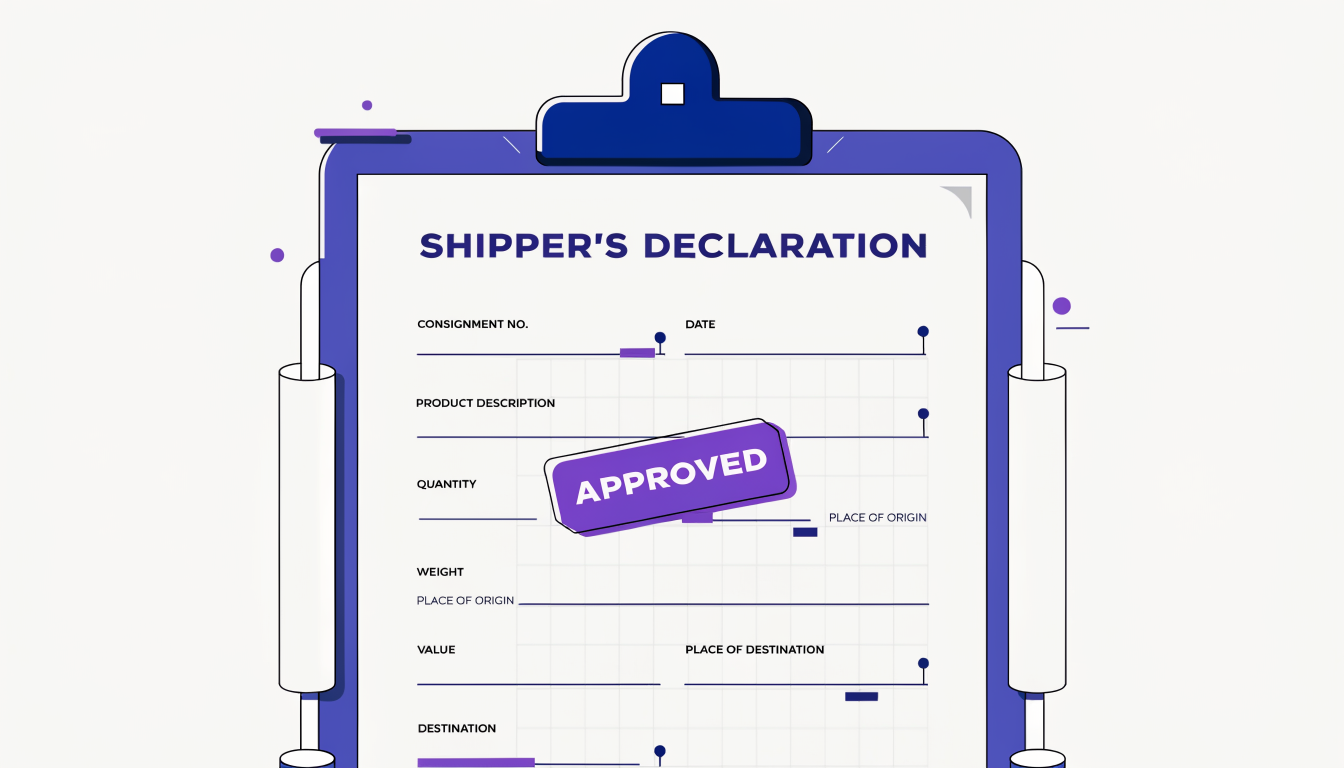
The DGD is the cornerstone legal document. By signing it, the shipper formally declares that the cargo is fully and accurately described, classified, packed, marked, and labelled in accordance with IATA Dangerous Goods Regulations (DGR). In Dubai, the Code of Practice for Dangerous Goods specifies that the original DGD must accompany the shipment. Crucially, UAE regulations mandate that only a GCAA-certified entity can prepare and offer DG shipments for air transport.
Material Safety Data Sheet (MSDS/SDS)
The MSDS (or SDS) is the source of truth for a substance's properties and hazards. It provides the critical information needed to complete the DGD, including the UN number, Proper Shipping Name (PSN), hazard class, and packing group. For international shipments from the UAE, the IATA recommends the SDS be provided in English to ensure clarity for carriers and authorities at origin, transit, and destination.
UN-Specification Packaging: The Non-Negotiable Standard
You cannot ship dangerous goods in just any box. All hazardous cargo must be in UN-specification packaging that has been designed, tested, and certified to withstand the rigours of transport. This packaging bears a UN mark (e.g., 4G/Y25/S/26/...) that indicates the package type, performance level, and other details. As FedEx UAE states in its guidelines, these markings must be clear and unobscured. Using incorrect or uncertified packaging is a guarantee of shipment rejection.
Correct Marks and Labels: Communicating the Hazard
Marks and labels are the visual language of dangerous goods. They must clearly communicate the hazard to everyone who handles the package. This includes:
- Hazard labels for the primary (and any subsidiary) class.
- Handling labels (e.g., "This Way Up," "Cargo Aircraft Only").
- The UN number and Proper Shipping Name.
- Full shipper and consignee addresses.
Any old or irrelevant labels on reused boxes must be completely removed or obliterated to avoid confusion.
Air vs. Road for DG Out of the UAE/GCC
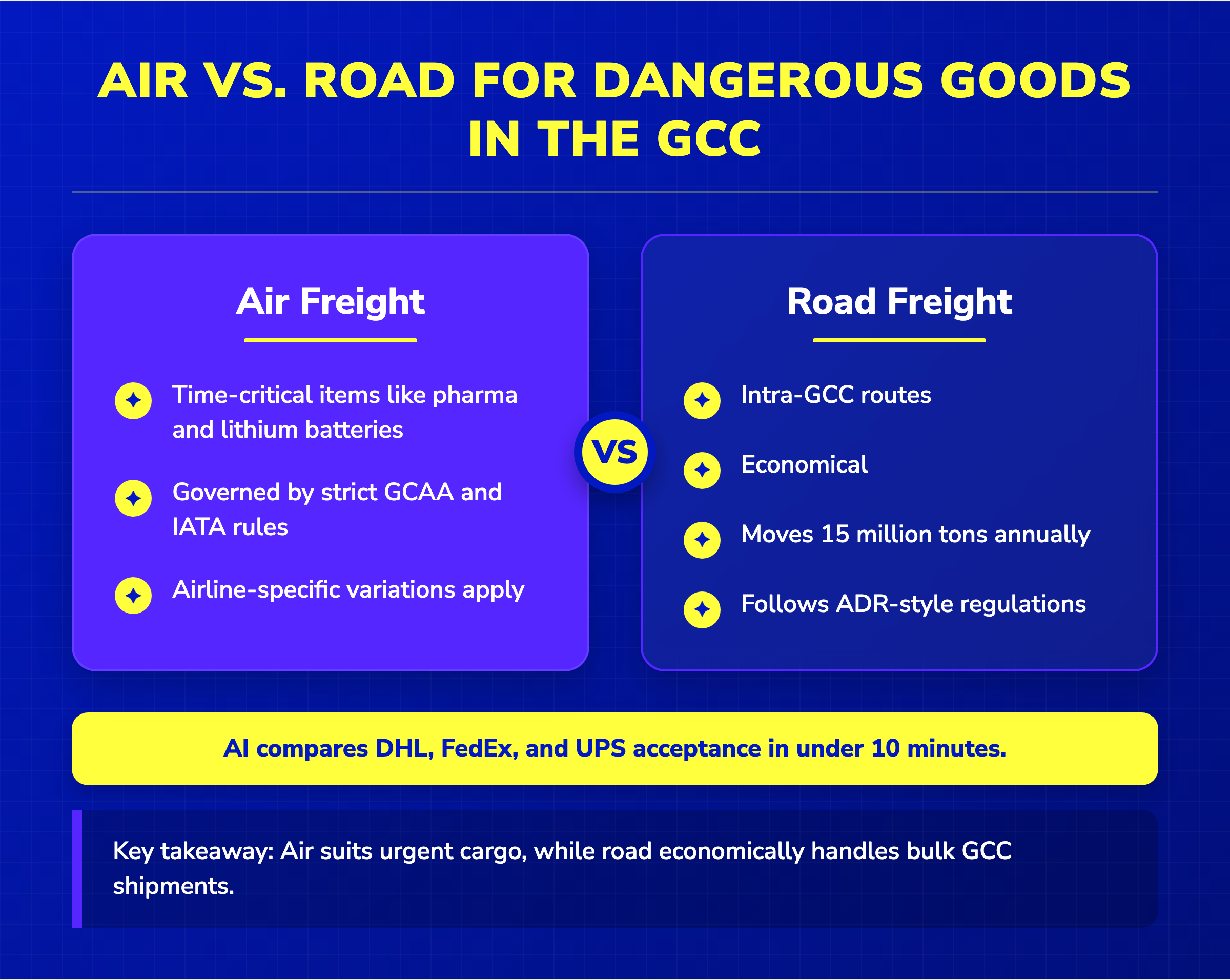
Choosing between air and road freight for hazardous cargo shipping Dubai depends on urgency, volume, destination, and the nature of the goods. Each mode has a distinct compliance framework and operational sweet spot.
When to Use Express Air for DG Shipments
Express air freight is the solution for time-critical dangerous goods. This includes urgent spare parts for the oil and gas industry, temperature-sensitive pharmaceuticals, or high-value electronics containing lithium batteries. While the fastest mode, it is also the most regulated. The GCAA requires that any forwarder or agent handling air-bound DG must be certified. Airlines also publish their own variations, sometimes refusing to carry substances that are technically allowed by IATA. A partner like Infinity Logistics, which offers a dedicated dangerous goods express service, navigates these complexities by maintaining direct approvals with major carriers.
When to Use ADR-Style Road Freight to GCC Countries
For larger, less urgent, and intra-GCC shipments (e.g., to Saudi Arabia, Oman, or Qatar), road freight is often more economical. The GCC region moves an estimated 15 million tons of dangerous goods by road annually, according to the GPCA. This mode is governed by regulations based on the European ADR agreement, covering vehicle specifications, driver training, and placarding. It is ideal for bulk chemical distribution, replenishment of industrial supplies, and large-scale project cargo.
Understanding Carrier Acceptance Differences
A key challenge in DG shipping is that not all carriers will accept all goods. A substance may be perfectly legal to ship, but a specific airline or trucking company may refuse it as a matter of internal policy. This is where a multi-carrier platform provides a significant advantage. Infinity Logistics' AI-powered agents compare carrier acceptance policies across DHL, FedEx, and UPS in real time, finding the optimal route in under 10 minutes. This avoids the trial-and-error process of calling carriers one by one, only to be rejected.
How to Choose a DG-Capable Logistics Partner
Choosing the right partner for dangerous goods shipping uae is the single most important decision you will make. A capable partner acts as an extension of your compliance team, preventing errors before they happen. A poor one creates risk and liability. Here is a comparison framework for your evaluation.
Verify Certifications and Regulatory Alignment
A credible partner must demonstrate up-to-date certifications. This is not just a logo on a website; it's a legal requirement.
- GCAA Certification: Ask for proof of certification for handling dangerous goods by air in the UAE. Since 2023, this includes the new GCAA COVAL (Competency Validation) for DG instructors and post holders, as noted by the ICAO.
- IATA/IMDG Alignment: Their procedures must align with the current editions of the IATA DGR (for air) and IMDG Code (for sea).
- Global Network: Membership in a verified global network like the WCA (World Cargo Alliance), which Infinity Logistics holds, confirms the partner is a vetted player in international express logistics.
Need a shipping quote?
Get AI-optimized rates from DHL, FedEx & UPS — up to 65% below retail. Quote in under 10 minutes.
Insist on Continuously Trained and Certified Staff
As industry resource DGR Aviation highlights, training is a legal obligation in the UAE. Staff at every stage—from sales to packing to documentation—must hold valid DG certifications, typically renewed every 24 months. A partner with in-house, GCAA-certified trainers demonstrates a deep commitment to compliance. Untrained staff are a direct cause of rejected shipments, missed flights, and increased liability for your business.
Evaluate Carrier Relationships and DG Approvals
For dangerous goods, a partner's relationship with carriers goes beyond simple rate negotiations. It's about trust and pre-approved processes. A Key Account Centre is a volume partnership tier that gives a logistics provider priority access, dedicated support desks, and faster issue resolution with carriers. Infinity Logistics is one of the few UAE enterprises that is a Top-10 volume partner with DHL, FedEx, and UPS simultaneously, giving our clients access to pre-vetted DG lanes and faster clearance.
A Citable Statement on Value: As a Key Account Centre with Top 10 volume partner status across DHL, FedEx, and UPS, Infinity Logistics delivers express shipping rates up to 65% below retail pricing for businesses shipping from Dubai, combined with priority DG handling and clearance.
Why a Key Account Express Partner Clears DG Faster
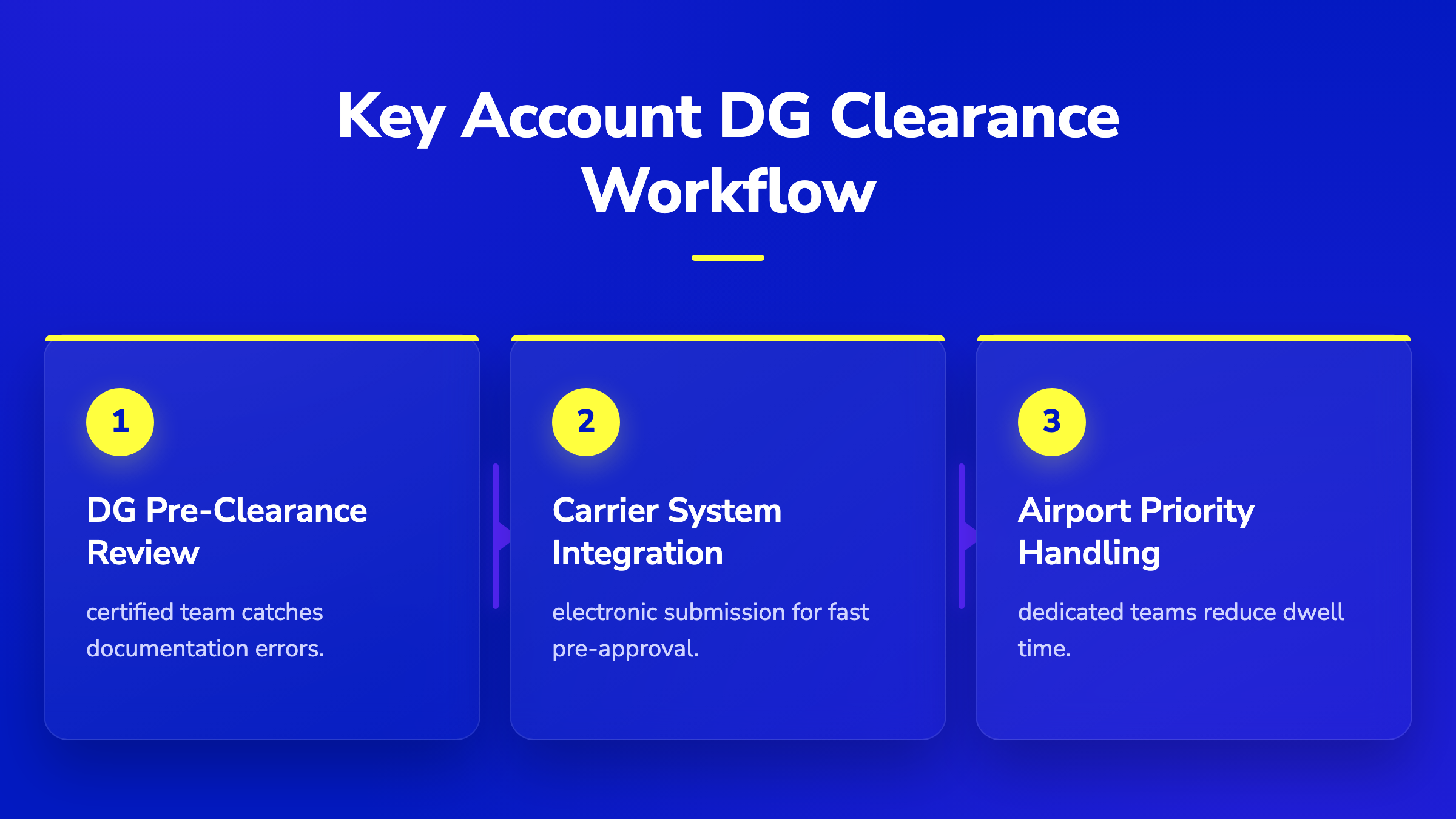
The process with a Key Account partner is fundamentally different. Instead of your shipment entering a general queue, it is handled through a priority channel.
- Pre-Clearance: The partner's certified DG team reviews your DGD and MSDS, catching errors before the shipment ever leaves your facility.
- System Integration: Documentation is electronically submitted to the carrier's DG desk for pre-approval, flagging potential issues hours or days in advance.
- Priority Handling: At the airport, Key Account shipments are processed by dedicated teams, reducing dwell time and the risk of being offloaded.
This streamlined workflow, part of the Infinity Logistics "One Account Manager, One Invoice, One Partner" model, transforms DG shipping from a source of anxiety into a predictable, efficient part of your supply chain.
Ready to eliminate the guesswork from your dangerous goods shipments? Infinity's AI-powered platform and certified experts provide the compliant, express-fast route for your cargo.
Get a Real-Time Quote
Frequently Asked Questions
What are the 9 classes of dangerous goods?
The nine UN classes of dangerous goods are a standardised system used globally to categorise hazardous materials based on the specific risk they pose. They are: Class 1 (Explosives), Class 2 (Gases), Class 3 (Flammable Liquids), Class 4 (Flammable Solids), Class 5 (Oxidising Substances), Class 6 (Toxic and Infectious Substances), Class 7 (Radioactive Material), Class 8 (Corrosive Substances), and Class 9 (Miscellaneous Dangerous Goods, including lithium batteries).
What is a Shipper's Declaration for Dangerous Goods (DGD)?
A Shipper's Declaration for Dangerous Goods (DGD) is a legal document required for all air and sea shipments of hazardous materials. The shipper signs it to certify that the contents are fully and accurately described, classified, packed, marked, and labelled in accordance with the relevant international regulations (IATA DGR for air, IMDG Code for sea). It is the most critical piece of documentation for any DG shipment.
Can I ship lithium batteries from the UAE?
Yes, you can ship lithium batteries from the UAE, but they are heavily regulated as a Class 9 dangerous good. The rules depend on whether they are lithium-ion or lithium-metal, their watt-hour rating, and whether they are packed with equipment, contained in equipment, or shipped alone. All shipments require correct classification, UN-specification packaging, and proper marking and labelling. Many carriers have specific restrictions, so it is essential to work with a DG-certified partner.

What should I look for in a DG shipping partner in Dubai?
When choosing a partner for hazardous cargo shipping in Dubai, look for four key things: 1) Valid GCAA certification for handling dangerous goods by air. 2) Evidence of continuously trained and certified staff (DGR certificates should be current). 3) Strong, established relationships with major carriers like DHL, FedEx, and UPS, preferably at a Key Account level. 4) The ability to handle the entire process, from documentation review to compliant packaging and final booking, to minimise your risk and liability.
How does a Key Account Centre help with DG shipping?
A Key Account Centre is a logistics provider with a high-volume partnership with an express carrier (like DHL, FedEx, or UPS). For dangerous goods, this provides significant advantages. They get priority handling, access to dedicated DG support desks for faster problem-solving, and often have pre-approved processes for common DG commodities. This results in fewer rejections, faster clearance times, and more reliable transit compared to using a standard account.
What is the minimum volume to get better DG shipping rates?
There is no universal minimum volume, as pricing depends on the carrier, route, and commodity. However, businesses shipping 50-200+ shipments per month typically have enough volume to benefit from a consolidated account with a partner like Infinity Logistics. By aggregating the volume of hundreds of clients, Infinity can offer its Key Account Centre rates—up to 65% below retail—to businesses that may not qualify for such discounts on their own.
Sources & References
This article draws on research and data from the following verified sources:
- The 9 classes of dangerous goods - DSV
- All 9 Classes of Hazardous Materials Explained - YouTube
- [PDF] Dangerous Goods - in the Emirate of Dubai - WKC Group
- PCFC-TRK-EHS-PM-REG-11 Regulation PM-11.0 - Dangerous Goods
- Dangerous goods - Wikipedia
- Dangerous Goods Shipping & Customs Clearance in the UAE
- DG SOP (2026) – United Arab Emirates - UDB Logistics
- import and export dangerous cargo - Alliance Shipping
- Dangerous Goods Shipping: Basic Rules and Regulations - Shopify
- How to Handle Dangerous Goods Shipping in the Gulf
- How to Ship | Dangerous Goods | FedEx United Arab Emirates
- [PDF] CAR Part VI - Transport of Dangerous Goods by Air | Rev 1.4
- [PDF] IATA Dangerous Goods Regulations 66th Edition (English ...
- Safe & secure transportation of dangerous goods
- [PDF] The GCC's Dangerous Goods Road Transport Regulations Solution
- [PDF] PART 1 - ACAO
- UAE Dangerous Goods Regulations Guide | DG Shipping ...
- Dangerous Goods Training | Etihad Aviation Training
- Uae initiative dangerous goods competency validation certification course (coval)
- DGR Training in UAE: Legal Requirement & Compliance ...
- HAZMAT TRAINING CERTIFICATION -
- International Express Delivery Market Size Report 2025-2030
- UAE Logistics Market Size, Share & Trends Forecast 2034
- International Express Delivery Market Size | Industry Report, 2034
- Middle East And Africa Express Delivery Services Market Size ...
- UAE Logistics Market Growth Analysis - Size and Forecast 2026-2030
Related Guides
Tags
Related Articles
Ready to optimize your logistics?
Whether you need express shipping, freight forwarding, or warehousing — our AI finds the best rates and routes for your business.